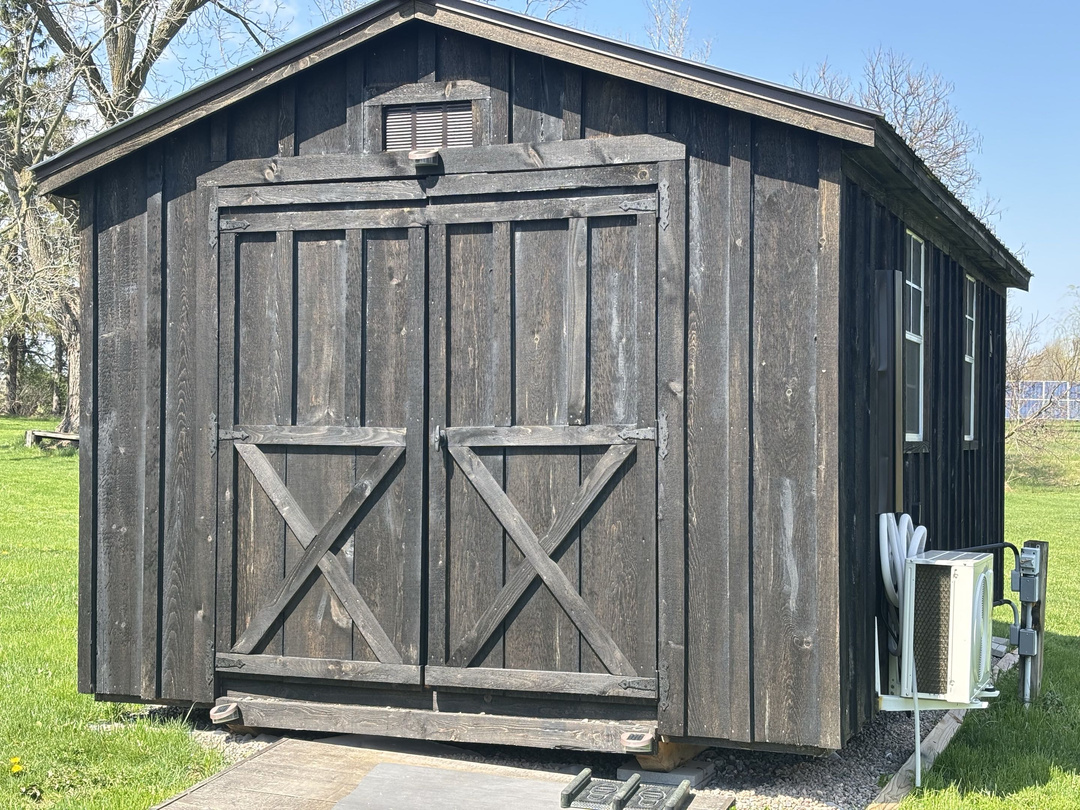
This is the bill of materials for the cleanroom itself, the shed, the air, the power, the surfaces, the safety gear. It’s everything needed to make the space function as a Class 100 lab, and it deliberately excludes two things: the major semiconductor process tools (those get their own guides), and the small miscellaneous stuff, hand tools, nails, outlets, gloves, sticky mats, that any build accumulates. Quantities aren’t listed because they depend entirely on your shed size and layout; the links are the specific products used in this build.
What “Class 100” means: no more than 100 particles of 0.5 µm or larger per cubic foot of air (ISO Class 5, in modern terms). For scale, ordinary indoor air runs hundreds of thousands to millions. You don’t get there with one magic filter, you get there with the combination below: sealed non-shedding surfaces, HEPA-filtered air showering down from the ceiling, positive pressure pushing leaks outward, and garments keeping the dirtiest thing in the room (you) under wraps.
The shell
Base structure: a 10 ft × 18 ft wooden shed. Nothing special about it - which is the point. The transformation happens on the inside.
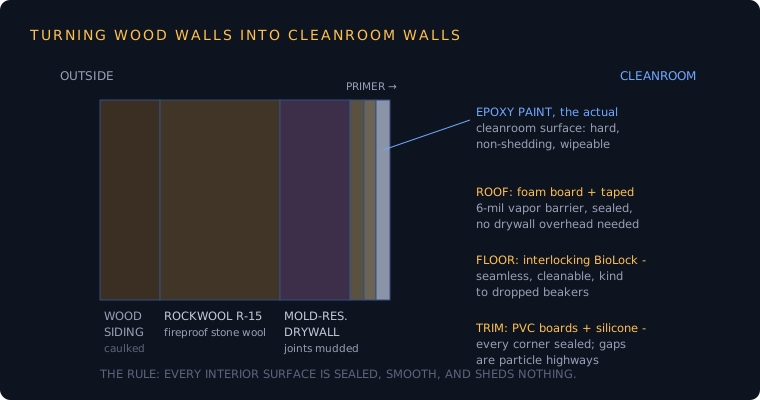
The interior build follows one rule: every surface must end up sealed, smooth, and shedding nothing. Wood is the opposite of a cleanroom material - it flexes, breathes, and sheds fibers, so it gets buried: insulation in the stud bays, mold-resistant drywall over that, joints mudded, primed, and finished with a pre-catalyzed epoxy paint, the hard, wipeable skin that is the actual cleanroom surface. The roof skips drywall entirely: foam board insulation sealed under taped 6-mil vapor barrier. The floor is interlocking BioLock, seamless and cleanable. PVC trim and silicone seal every corner and transition, because gaps are particle highways.
| Item | Product |
|---|---|
| Insulation | ROCKWOOL Comfortbatt R-15 stone wool batts |
| Drywall | Gold Bond 1/2-in PURPLE XP mold/moisture-resistant panels |
| Joint compound | SHEETROCK premixed all-purpose |
| Primer | KILZ 2 all-purpose water-based |
| Interior paint | Sherwin-Williams Pro Industrial Pre-Catalyzed Water-based Epoxy |
| Roof insulation | 1-in expanded polystyrene foam board |
| Roof panel tape | Reflectix 2-in reflective insulation tape |
| Roof vapor barrier | 6-mil clear construction film |
| Exterior sealant | DAP Dynaflex Ultra paintable latex caulk |
| Trim | AZEK 1×6 PVC trim board · AZEK 1×3 PVC trim board |
| Trim sealant | GE Tub & Tile silicone caulk |
| Flooring | FreeStyle BioLock interlocking flooring |
The air
This is the system that actually earns the “cleanroom” name.
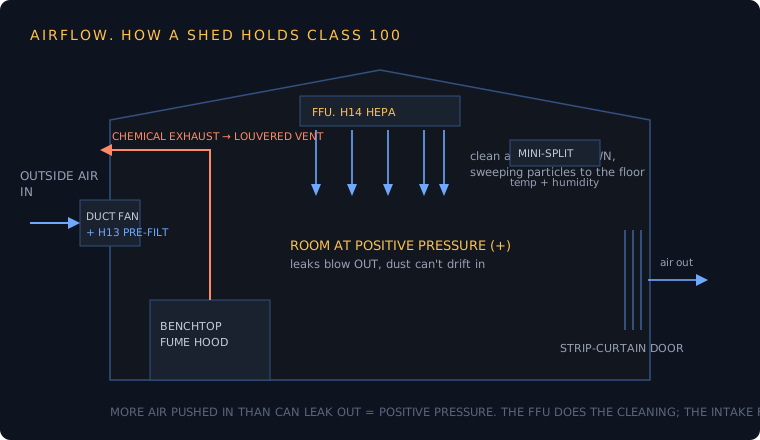
Two air paths, two jobs. An inline duct fan pulls outside air through a HEPA pre-filter. Its job isn’t final cleanliness, it’s volume: pushing more air into the room than can leak out, so the shed sits at positive pressure and every crack blows outward instead of drifting dust in. The ceiling fan-filter unit (FFU) with an H14 HEPA filter does the real cleaning, showering filtered air downward and sweeping particles toward the floor and out. The strip-curtain door lets you (and the excess air) pass while keeping the pressure differential. The fume hood exhausts chemical vapors through its own dedicated louvered vent, chemistry air leaves the building, it doesn’t recirculate.
| Item | Product |
|---|---|
| FFU / HEPA | H14 fan-filter unit (laminar flow, filter included) |
| Intake fan (main) | 10-in inline duct fan with speed controller |
| Intake fan (small) | VIVOSUN 4-in 195 CFM inline duct fan |
| Intake pre-filter | True HEPA H13 replacement filters |
| Fume hood exhaust | IMPERIAL 4-in louvered vent hood |
| Door | VIZ-PRO strip door curtain, 84 × 36 in |
Climate
A cleanroom that swings in temperature and humidity ruins photoresist processing and rusts tools, so the shed gets a proper mini-split heat pump
- and the remaining items here are what it takes to install one yourself (the vacuum pump pulls the refrigerant lines down before charging).
| Item | Product |
|---|---|
| Mini-split | Confortotal 12,000 BTU mini-split heat pump, 110 V, WiFi |
| Install vacuum pump | VIVOHOME 1/3 HP 4 CFM single-stage rotary vane |
| Gasket sealant | Refrigeration Technologies Nylog RT201B |
| Wall bracket | Mini-split mounting bracket, 7–15k BTU |
| Line-set tape | Weatherproof PVC pipe wrap tape |
The light (and why it’s yellow)
Recessed LED ceiling lights, each covered with a CTO color gel filter. That’s not aesthetics: photoresist is sensitive to blue and UV light, and unfiltered white LEDs carry enough blue to slowly expose your resist while it sits on the bench. The orange CTO gel strips the blue out. That is why every lithography bay on Earth glows yellow, this one included.
| Item | Product |
|---|---|
| Lighting | Meconard 6-in recessed LED lights, 6-pack |
| Filter gels | Meking 16×20 in CTO photo light gels |
Power
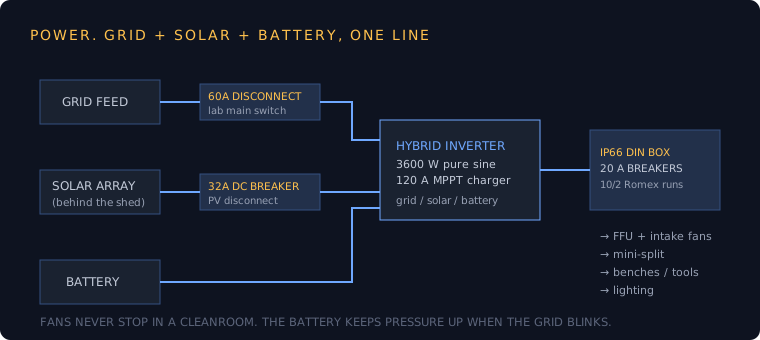
The lab runs on a hybrid of grid, solar, and battery through a 3600 W pure-sine inverter with a built-in MPPT solar charger. Beyond the off-grid capability, the battery buys something a cleanroom specifically wants: the fans never stop, so a grid blink doesn’t collapse the room’s positive pressure mid-process. A 60 A disconnect is the lab’s main switch; inside, an IP66 DIN-rail box with 20 A breakers splits the circuits, run in 10/2 Romex.
Mains wiring is one of the two places in this build (the mini-split refrigerant loop being the other) where “DIY” should mean “DIY to code, inspected where required”; get it checked if you’re not certain.
| Item | Product |
|---|---|
| Main disconnect | GE 60 A single-phase enclosed molded-case switch |
| Hybrid inverter | Xijia 3600 W pure sine inverter + 120 A MPPT solar charger |
| PV disconnect | CGELE 32 A DC 500 V breaker box |
| Distribution box | IP66 waterproof 2-DIN-rail junction box |
| Breakers | Chtaixi 20 A DIN-rail miniature circuit breakers |
| Wiring | Southwire Romex 10/2 w/ground NM-B, 50 ft |
| Wire connectors | Insulated twist wire connectors, 180 pc |
Safety and chemical handling
Wet chemistry needs three things the moment it enters the building: a rated place to store it, a rated place for its waste, and a hood that takes its vapors outside. Solvent-soaked wipes go in the self-closing steel waste can. Solvent fumes in a sealed, climate-controlled wooden box are how sheds stop existing.
| Item | Product |
|---|---|
| Chemical storage | 2-gal flammables safety cabinet |
| Solvent waste | Justrite 2-gal galvanized oily waste can |
| Fume hood | Bel-Art benchtop molded fume hood, acrylic sash |
Bench and utility
| Item | Product |
|---|---|
| Worktables | Uline economy stainless worktable, 36×24 / Uimoso 24×36 stainless prep table |
| Stool | Rolling hydraulic stainless stool |
| Glove dispenser | Wall-mount glove box dispenser |
Stainless everywhere for the same reason as the epoxy walls: it doesn’t shed, and it wipes clean.
Garments
The dirtiest object in any cleanroom is the person. Full coverage - coverall, eyes-only hood, and boots, keeps skin flakes, hair, and clothing fibers out of the air you just spent all this effort cleaning.
| Item | Product |
|---|---|
| Coverall | Worklon Raglan Sleeve Coverall, Burlington C3 |
| Hood | Worklon OSFA pullover eyes-only hood, HD-ESD |
| Boots | Worklon Hypalon-sole boot, Burlington C3 |
Questions about the build, or something you think is missing from the list? Ask in the comments on the channel - if it’s a common one, the answer gets added here.
Related guides: Making LEDs From an Epiwafer